
.png)
Halloween Pet Safety Tips for a Calm and Safe Night | The Bond Between
The doorbell rings, kids cheer on the porch, candy bowls shuffle, and a dog who was calm ten minutes ago is suddenly pacing the hallway. For many pets, Halloween is louder, stranger, and more tempting than an ordinary night. A little planning can prevent a stressful evening from turning into an emergency.
At The Bond Between and The Bond Between Vet Center, our work with dogs, cats, foster animal safety, and pet safety starts with the same idea: animals do best when people plan for their needs before trouble starts. These tips can help keep pets secure, comfortable, and out of danger while the holiday fun happens around them.

Keep candy and treats completely out of reach
Candy is one of the biggest holiday risks for pets. Chocolate can be toxic to both dogs and cats, and darker chocolate can be especially dangerous. Raisins can cause serious health problems in dogs. Sugar-free candy, gum, and baked goods may contain xylitol, which is highly toxic and can be life-threatening.
The safest plan is simple: keep all candy, treat bags, and wrappers in a closed cabinet or pantry. A bowl on a coffee table is easy for a curious pet to reach. A backpack full of candy dropped by the door can be just as risky.
Wrappers, foil, plastic, and lollipop sticks can also cause choking or intestinal blockages. Even if the candy itself is not the main concern, the packaging can create a serious problem.
If a pet eats candy, wrappers, raisins, chocolate, or anything containing xylitol, contact a veterinarian or pet poison control service right away. Do not wait for symptoms to appear. This article is for general education and does not replace veterinary care.
Set up a quiet room before trick-or-treating begins
Many pets find repeated doorbell rings stressful. Costumes, masks, flashlights, loud voices, and strangers at the door can make the night feel unpredictable. Pets may bark, hide, scratch, bolt, or show signs of fear they do not show on a normal evening.
A quiet zone gives them a safe place away from the action. Choose a room with a door that closes securely. Add familiar bedding, water, a favorite toy, and a long-lasting chew or food puzzle if appropriate for that pet. For cats, include access to a litter box if they will be in the room for more than a short time.
Close blinds or curtains to reduce flashes of movement outside. Turn on a television, soft music, or a white noise machine to muffle door sounds. If the pet is especially anxious, prepare the room before visitors arrive so the setup feels calm rather than rushed.
This is especially helpful for foster pets. A foster animal may still be learning the home, the routine, and the people in it. Even a friendly pet can feel overwhelmed by a night full of noise and costumes.

Skip evening walks through crowds and noise
A walk during trick-or-treating hours may sound festive, but it can be too much for many dogs. Crowded sidewalks, unusual costumes, excited children, glow sticks, and sudden sounds can trigger pulling, lunging, freezing, or escape attempts.
Plan exercise earlier in the day. A long sniff walk, a game in the yard, or indoor enrichment can help burn energy before the neighborhood gets busy. Once the evening activity starts, keep pets indoors and away from doors that open often.
If a dog must go outside for a bathroom break, use a secure leash and collar or harness. Check the fit before stepping out. A frightened dog can back out of loose equipment quickly. Keep the trip short and stay in a familiar, well-lit area.
Be careful with costumes and accessories
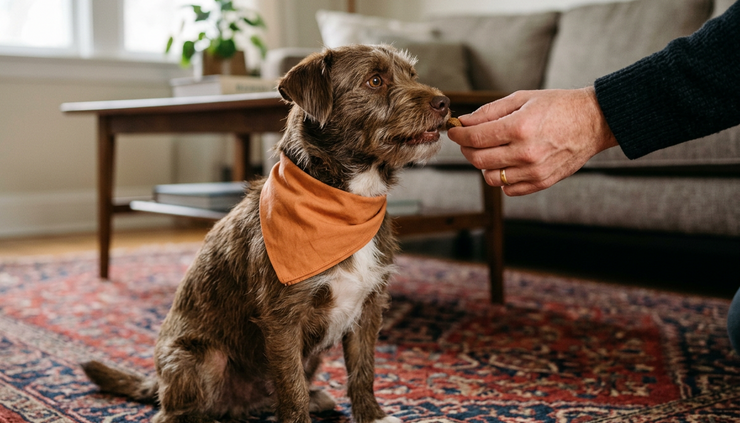
Pet costumes can be cute, but comfort comes first. Some animals tolerate a soft bandana or light sweater. Others feel trapped, irritated, or frightened by clothing. Watch body language closely. A pet who freezes, crouches, pants, paws at the costume, tucks their tail, or tries to hide is not enjoying it.
Costumes should never restrict breathing, vision, hearing, walking, or bathroom needs. Avoid small buttons, bells, strings, elastic loops, and dangling parts that can be chewed or swallowed. Do not leave a dressed pet unsupervised.
If photos are part of the plan, keep the session short. A calm pet in a comfortable bandana is better than a stressed pet in a full costume. Treats, praise, and patience make a much better memory.
Check collars, tags, and microchip information
Even indoor pets can slip out when the door opens again and again. Before the holiday evening begins, make sure every pet has visible identification. A collar with an up-to-date tag helps neighbors or animal control contact you quickly if a pet gets loose.
Microchips are also valuable, but the registration information must be current. If a phone number or address has changed, update the account before the holiday. For foster pets, confirm the correct contact process with the rescue or shelter. Keep a clear recent photo on your phone in case you need to make a lost pet report.
During trick-or-treating hours, use barriers when possible. A baby gate, closed interior door, or crate can add protection between a pet and the front entry. The goal is to prevent a dash before it can happen.
Make decorations safe for curious pets
Seasonal decorations can create hidden risks. Lit candles inside pumpkins can burn paws, whiskers, or tails. Battery-operated candles are usually a safer choice, though the batteries must still stay out of reach.
Cords from lights and decorations should be tucked away or covered so pets cannot chew them. Glow sticks and glow jewelry can upset a pet’s stomach and may cause drooling or irritation if punctured. Decorative corn, fake cobwebs, and small plastic pieces can also tempt curious pets.
Walk through the home at pet level before the evening begins. If something looks chewable, reachable, or easy to knock down, move it.

Watch for stress signals and know when to step in
Pets often show stress before they panic. Signs may include pacing, yawning, trembling, hiding, barking, growling, drooling, flattened ears, tucked tail, or refusing food. Cats may retreat, swat, hiss, or stop using their normal resting spots.
Respond early. Move the pet to a quieter space, reduce noise, and give them distance. Do not force greetings with guests or costumed children. A pet who feels cornered may react in ways that are out of character.
For pets with known noise anxiety or severe fear, talk with a veterinarian before the holiday. Some animals benefit from a planned behavior or medication approach, but that decision should be made with professional guidance.
A calm night starts with a simple plan
The best Halloween pet safety plan is not complicated. Put candy away. Create a quiet room. Keep pets indoors during busy hours. Choose comfort over costumes. Check identification. Make decorations safer before the first doorbell rings.
For more animal care updates and resources from The Bond Between, sign up to stay connected.
With a little preparation, the night can stay fun for people and peaceful for pets. The goal is simple: a safe home, a calm animal, and no scary surprises after the candy bowl is empty.

Comments